Indonesia, the world’s largest archipelago, offers a culinary experience as diverse as its thousands of islands. From the bustling streets of Jakarta to the serene villages of Bali, you can taste a rich history shaped by local traditions, trade, and cultural exchanges with India, China, the Middle East, and Europe. Every dish tells a story through its spices, cooking techniques, and regional ingredients.
The Essence of Indonesian Cuisine
Indonesian cuisine delights with bold and layered flavors. Chefs balance aromatic spices, fresh herbs, coconut milk, and chili to create meals that engage multiple senses. Rice forms the foundation of almost every meal, while side dishes of vegetables, meats, and sauces bring variety and nutrition. Additionally, each region adds its unique touch, making Indonesian food both diverse and exciting.
Key Ingredients in Indonesian Cooking
- Rice (Nasi): Indonesians serve rice steamed, fried, or molded into cakes like lontong or ketupat.
- Spices and Herbs: Turmeric, coriander, galangal, lemongrass, kaffir lime leaves, cloves, and cinnamon provide the distinctive aroma of the cuisine.
- Coconut Milk: It enriches curries, soups, and desserts, adding creaminess and flavor.
- Soy Sauce (Kecap Manis): Sweet soy sauce enhances fried rice, stir-fries, and marinades.
- Chilies: Fresh, dried, or ground, chilies make sambals spicy and heat up many dishes.
- Seafood and Meats: Chicken, beef, pork (in certain regions), fish, and shrimp appear frequently in meals, depending on local traditions.
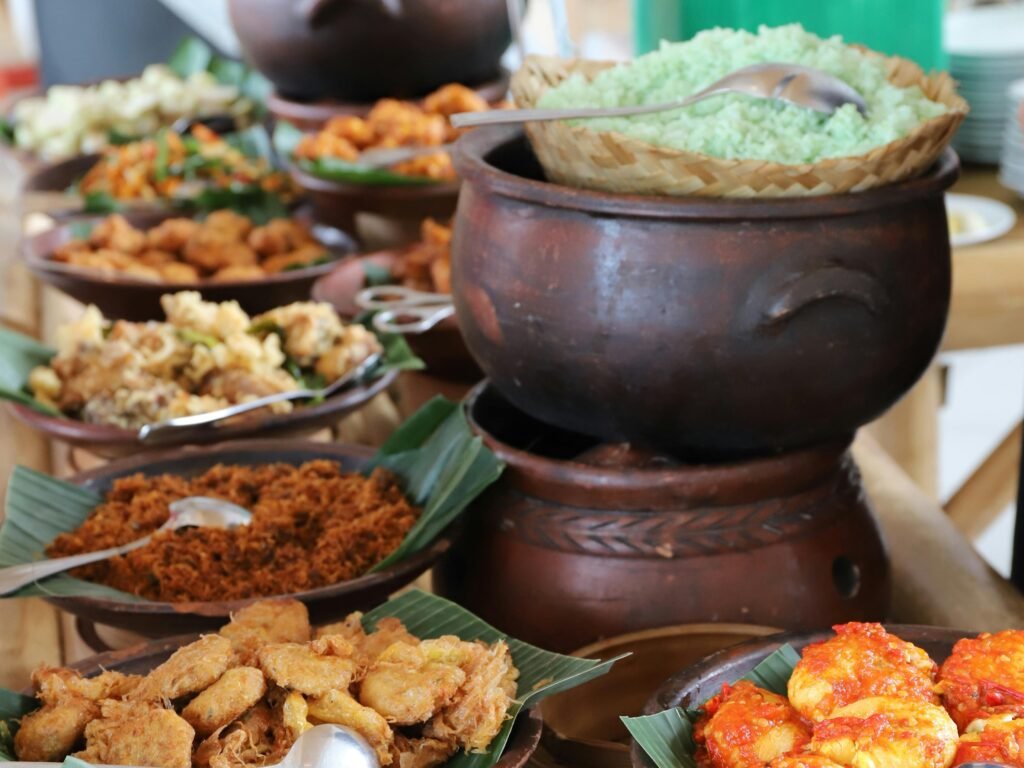
Popular Indonesian Dishes
Indonesia’s cuisine offers something for every palate. Here are some iconic dishes you should try:
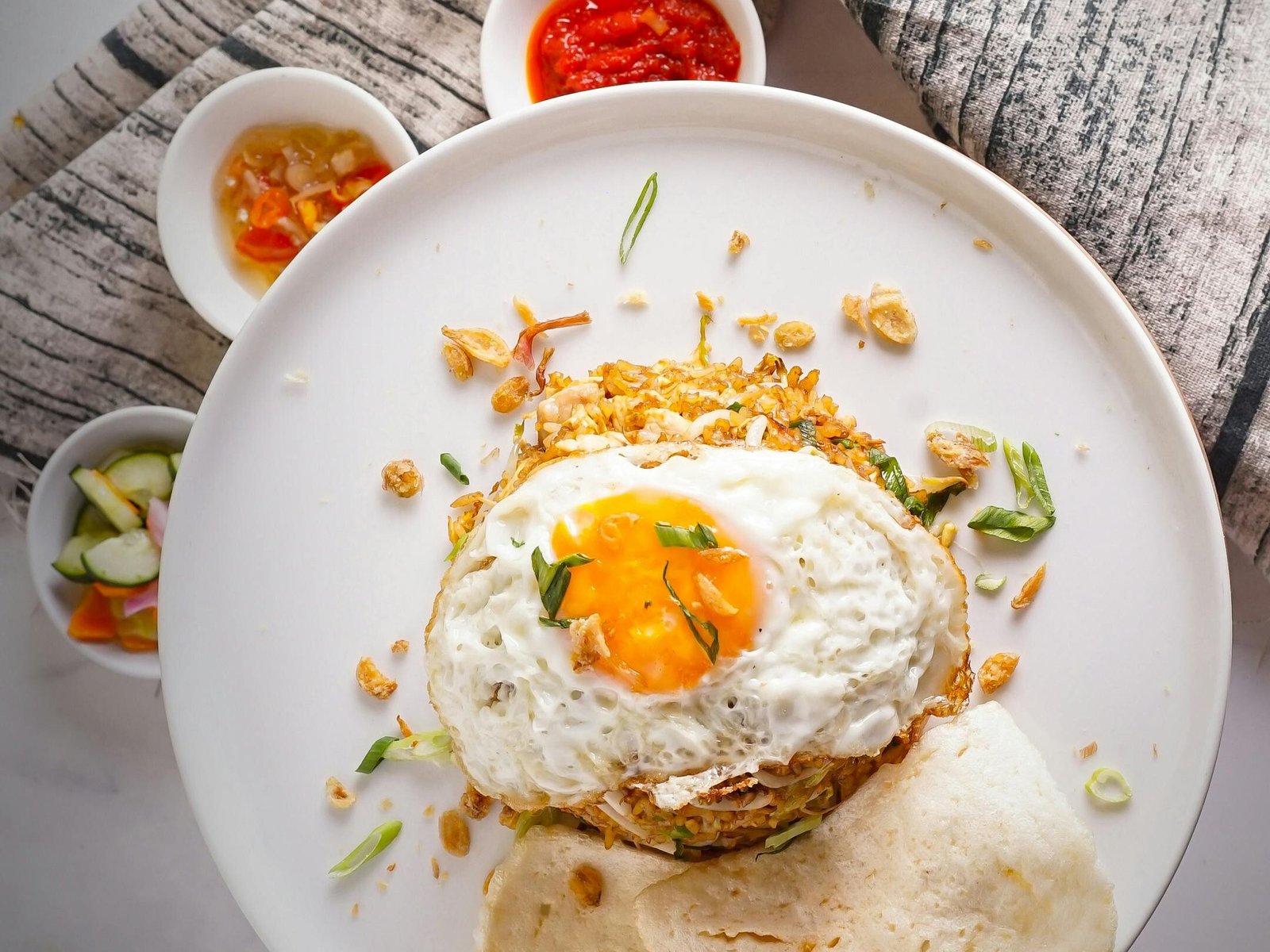
Nasi Goreng
Nasi goreng, Indonesia’s famous fried rice, combines leftover rice with vegetables, meat, and eggs. Sweet soy sauce, garlic, shallots, and chili flavor the dish. Usually, a fried egg tops it, and prawn crackers and pickles complete the meal.
Satay
Satay consists of skewered and grilled meat served with rich peanut sauce. Chefs marinate chicken, beef, or lamb in turmeric, coriander, garlic, and lemongrass, then grill it over charcoal for a smoky taste. Street vendors often serve satay as a snack or as part of a main meal.
Rendang
Rendang, a slow-cooked beef stew from West Sumatra, simmers beef in coconut milk with ginger, turmeric, garlic, and chili for hours. This long cooking process produces tender meat and deep flavors. People traditionally serve rendang during special occasions and festivals.
Gado-Gado
Gado-gado is a colorful vegetable salad tossed with peanut sauce, boiled eggs, tofu, and tempeh. Its balance of textures and flavors makes it a popular vegetarian dish across Indonesia.
Soto
Soto is a traditional soup with countless regional variations. Chefs prepare it with chicken or beef, vegetables, noodles, rice, and aromatic herbs. Many Indonesians enjoy soto for breakfast or lunch, and each region adds its own twist.
Regional Variations in Indonesian Cuisine
Java
Javanese dishes often taste sweeter than other regions. For example, gudeg (young jackfruit stew) and soto ayam (chicken turmeric soup) include palm sugar and mild spices. Street foods like tempeh goreng (fried fermented soybeans) remain popular.
Sumatra
Sumatran cuisine stands out for its spiciness and bold flavors. Padang cuisine, famous for rendang, sambal, and gulai (curry), uses rich coconut-based sauces and intense chili heat.
Bali
Balinese cuisine focuses on fresh herbs and aromatic spices. Locals prepare babi guling (suckling pig) and lawar (vegetable and meat salad) during ceremonies and festivals. These dishes combine sweet, savory, and aromatic flavors.
Sulawesi
Sulawesi specializes in seafood and spicy dishes. Coto Makassar (beef soup) and ikan bakar (grilled fish) showcase turmeric, lime, and chili. Street markets here offer an abundance of flavorful local delicacies.
Indonesian Snacks and Street Foods
Street food forms a vibrant part of Indonesian culture. Popular choices include:
- Bakso: Meatball soup with noodles, tofu, and egg.
- Martabak: Stuffed pancake with sweet or savory fillings, eaten as a snack or dessert.
- Pempek: Fish cakes from Palembang served with spicy vinegar sauce.
- Kue: Traditional cakes made with rice flour, coconut, and palm sugar.
Indonesian Desserts
Indonesian desserts are often sweet and fragrant, usually featuring coconut, rice, and palm sugar. Popular treats include:
- Dadar Gulung: Green pandan pancakes filled with sweet coconut.
- Klepon: Glutinous rice balls with palm sugar filling, coated in grated coconut.
- Es Cendol: A coconut milk dessert drink with green rice flour jelly and palm sugar syrup.
- Pisang Goreng: Fried bananas, sometimes topped with palm sugar or chocolate.
Cooking Techniques in Indonesia
Indonesians use various techniques to enhance flavor:
- Grilling (Bakar): Meat and seafood are often grilled after marinating in spices.
- Frying (Goreng): Common for snacks, rice dishes, and street foods.
- Steaming (Kukus): Rice cakes, dumplings, and some desserts are steamed for a delicate texture.
- Simmering (Rebus or Gulai): Slow-cooked in coconut milk or broth, perfect for curries and stews.
Frequently Asked Questions (FAQs) About Indonesian Cuisine
What is the spiciest Indonesian dish?
Padang-style dishes and sambals rank among the spiciest. Depending on the recipe, sambal can be extremely hot.
Is Indonesian food vegetarian-friendly?
Yes, dishes like gado-gado, tempeh, tofu dishes, and vegetable soups suit vegetarians. However, some recipes include shrimp paste or fish sauce, so check ingredients carefully.
Can I find Indonesian cuisine outside Indonesia?
Absolutely. Restaurants offering Indonesian food exist worldwide, especially in countries with Indonesian communities. Nasi goreng, satay, and rendang are popular internationally.
What drinks are commonly served in Indonesia?
People enjoy teh manis (sweet tea), kopi tubruk (Indonesian-style coffee), es cendol, and es kelapa muda (young coconut water).
What makes Indonesian cuisine unique?
Its uniqueness comes from the combination of bold spices, aromatic herbs, and regional diversity. Each dish reflects the country’s culture, history, and traditions.
Final Thoughts
Indonesian cuisine celebrates diversity, culture, and flavor. From fiery curries and tender rendang to sweet desserts and fresh vegetable salads, its bold flavors leave a lasting impression. Each dish tells a story about Indonesia’s traditions and culinary heritage.
Exploring Indonesian cuisine lets travelers and food enthusiasts experience the country’s vibrant culture through taste. Whether dining on Jakarta’s streets or preparing dishes at home, Indonesian food invites you to enjoy a rich, unforgettable culinary journey.
If you enjoyed learning about Indonesian cuisine, don’t stop here—there’s so much more to explore. Check out our other guides to discover the best places to visit, essential tips for travelers, and business insights for those planning to invest or start a venture in Indonesia. Dive deeper into everything Indonesia has to offer! READ HERE!