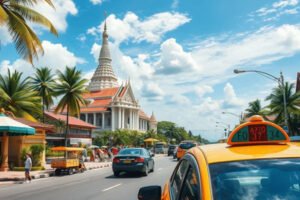
Singapore is often praised for its cleanliness, safety, and organization — and nowhere is this more evident than in its public transportation system. Whether you’re a local commuter or a tourist exploring the Lion City, Singapore’s transport network makes getting around fast, reliable, and affordable.
This blog post explores everything you need to know about public transportation in Singapore — from its history and structure to costs, payment systems, and future innovations.
A Brief History of Public Transportation in Singapore
Before the 1970s, Singapore’s public transport system was fragmented and largely operated by private bus companies. With rapid population growth and urban expansion, the government recognized the need for a more structured and efficient network.
In 1973, the Public Transport Council (PTC) was formed to regulate services and fares. By 1987, Singapore launched its first Mass Rapid Transit (MRT) line, transforming how people moved around the city.
The MRT quickly became the backbone of public transport, reducing road congestion and providing fast, air-conditioned comfort for millions of passengers daily. Today, Singapore’s system integrates MRT, Light Rail Transit (LRT), buses, and taxis under a single smart payment network — making it one of the most seamless and advanced systems in the world.
The Structure of Singapore’s Public Transport System
Singapore’s public transportation system is a multi-modal network that includes:
MRT (Mass Rapid Transit)
The MRT is the main mode of transport, covering almost every corner of the island. With over 200 km of rail lines and 6 major lines, the MRT connects residential neighborhoods, commercial hubs, and tourist attractions efficiently.
Popular lines include the North-South Line (red), East-West Line (green), Downtown Line (blue), and Circle Line (yellow). Trains operate from around 5:30 AM to midnight, with peak-hour frequencies as low as 2–3 minutes.
LRT (Light Rail Transit)
The LRT supplements the MRT by connecting housing estates like Bukit Panjang, Sengkang, and Punggol to nearby MRT stations. It’s designed mainly for short-distance travel.
Bus Network
Singapore’s buses reach every part of the island, providing connections to areas not directly served by MRT or LRT. Major operators include SBS Transit and SMRT Buses. Buses are air-conditioned, clean, and equipped with digital displays showing next-stop information.
Taxis and Private Hire Vehicles
Taxis are plentiful, though pricier than public transport. Popular ride-hailing apps like Grab, Gojek, and TADA make booking easy. Many residents use them for late-night or door-to-door travel when MRT services stop.
Costs and Fares
Singapore’s transport fares are distance-based — the farther you travel, the more you pay, regardless of whether you switch between MRT and bus. This integrated fare structure encourages efficient travel.
- MRT Fares: Range from SGD 0.92 to SGD 2.20 per trip for adults using an EZ-Link or NETS FlashPay card.
- Bus Fares: Typically SGD 0.90 to SGD 2.00, depending on distance.
- Monthly Travel Pass: A Singapore Tourist Pass offers unlimited rides for SGD 10 (1 day), SGD 16 (2 days), or SGD 20 (3 days) — ideal for short-term visitors.
- Taxi Rates: Start at around SGD 4.10 for the first kilometer and SGD 0.22–0.33 per 400 meters after that, with surcharges during peak hours.
Payment is fully cashless through contactless cards or mobile wallets such as EZ-Link, NETS FlashPay, Visa, Mastercard, and even Apple Pay or Google Pay.
Services and Accessibility
Singapore’s transport system is designed to serve everyone, including seniors and persons with disabilities. Features include:
- Barrier-free access with elevators and ramps in MRT stations
- Priority seats and reserved spaces for wheelchairs and strollers
- Audio-visual announcements on trains and buses
- Real-time apps like MyTransport.SG to plan routes and check arrival times
Cleanliness and punctuality are strictly enforced, with fines for littering, eating, or smoking in public transport areas.
Environmental Initiatives
Sustainability is at the heart of Singapore’s transport planning. The Land Transport Authority (LTA) promotes green transportation through:
- Introduction of electric buses and hybrid taxis
- Expansion of cycling paths and pedestrian-friendly zones
- Plans for a fully electric bus fleet by 2040
- Development of Transit-Oriented Developments (TODs) to reduce car dependence
These efforts contribute to Singapore’s goal of becoming a “car-lite” nation, improving air quality and urban livability.
Upcoming Projects and Future Innovations
Singapore’s transport network continues to evolve. Key projects include:
- Thomson-East Coast Line (TEL): Connecting northern suburbs to the eastern coastal region by 2026.
- Cross Island Line (CRL): One of the longest future MRT lines, easing east-west travel.
- Smart Mobility: Using AI and real-time analytics to improve route efficiency and passenger comfort.
- Autonomous Buses: Trials are underway for driverless buses and shuttle services in selected districts.
By 2030, over 80% of households will live within a 10-minute walk of an MRT station — a remarkable achievement in urban planning.
Tips for Tourists and Newcomers
If you’re visiting or newly relocated to Singapore, here are some quick tips to navigate like a local:
- Get an EZ-Link or NETS FlashPay card for seamless travel.
- Use Google Maps or Citymapper for real-time directions.
- Avoid rush hours (7:30–9:30 AM, 6:00–8:00 PM) for a more comfortable ride.
- Respect local etiquette — queue politely, don’t block doors, and keep noise levels low.
Why Singapore’s Public Transport System Stands Out
Singapore’s system is widely regarded as one of the most efficient in the world because it is:
- Clean and well-maintained
- Extremely punctual
- Affordable for all income levels
- Integrated across multiple modes
- Environmentally sustainable
This success didn’t happen by accident — it’s the result of decades of careful planning, strict regulation, and technological innovation.
Conclusion
The public transportation system in Singapore is more than just a means of travel — it’s a reflection of the country’s forward-thinking approach to urban living. Whether you’re riding the MRT through Marina Bay, catching a bus to Sentosa, or taking a Grab ride home, you’ll experience a system built on efficiency, comfort, and sustainability.
For anyone looking to understand how a city can move millions of people daily with precision and ease, Singapore stands as a model for the world.